Update on the Collaboration with LeNS-UK
Stryde nodes deployed at Leverett Glacier
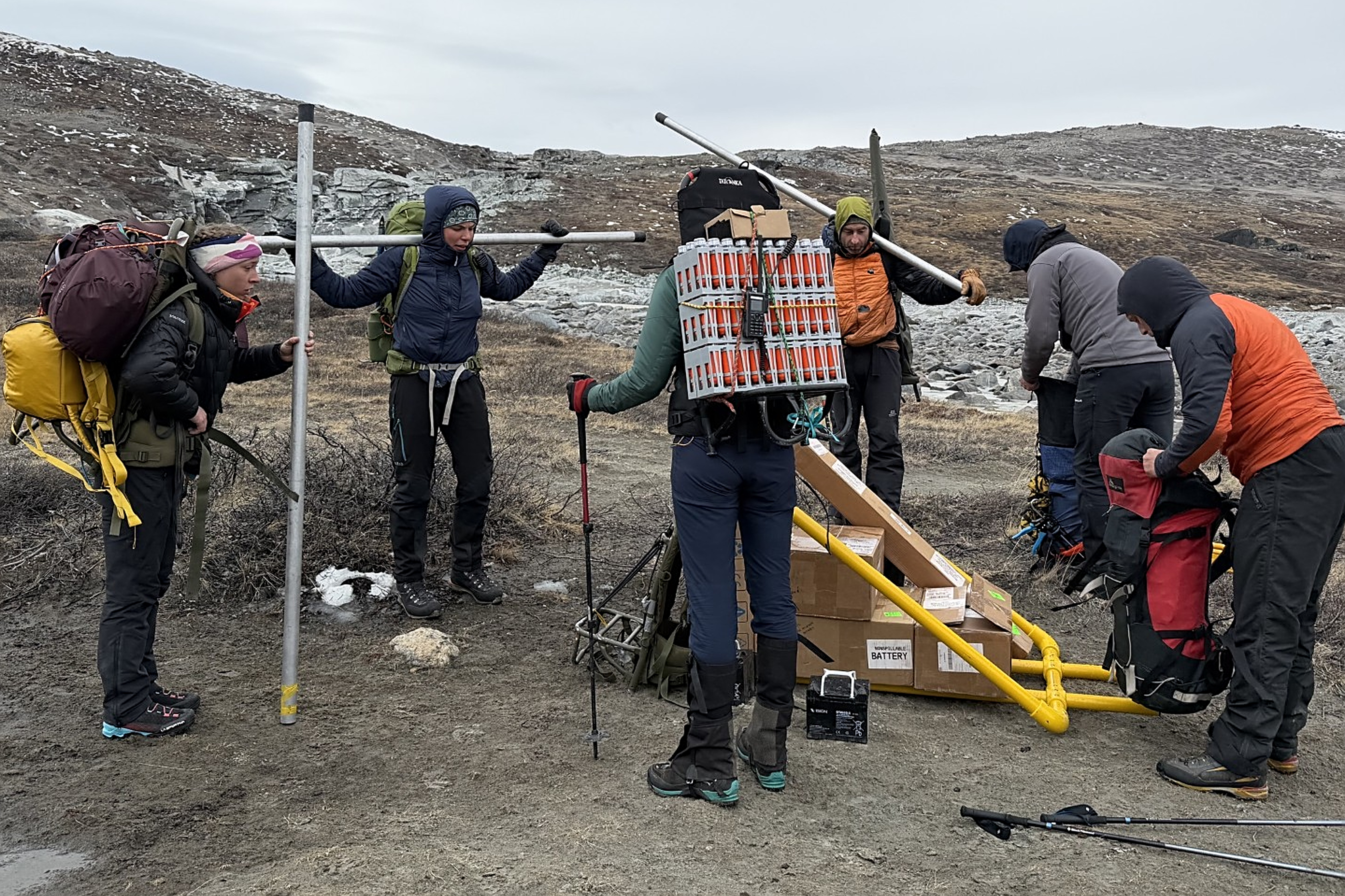
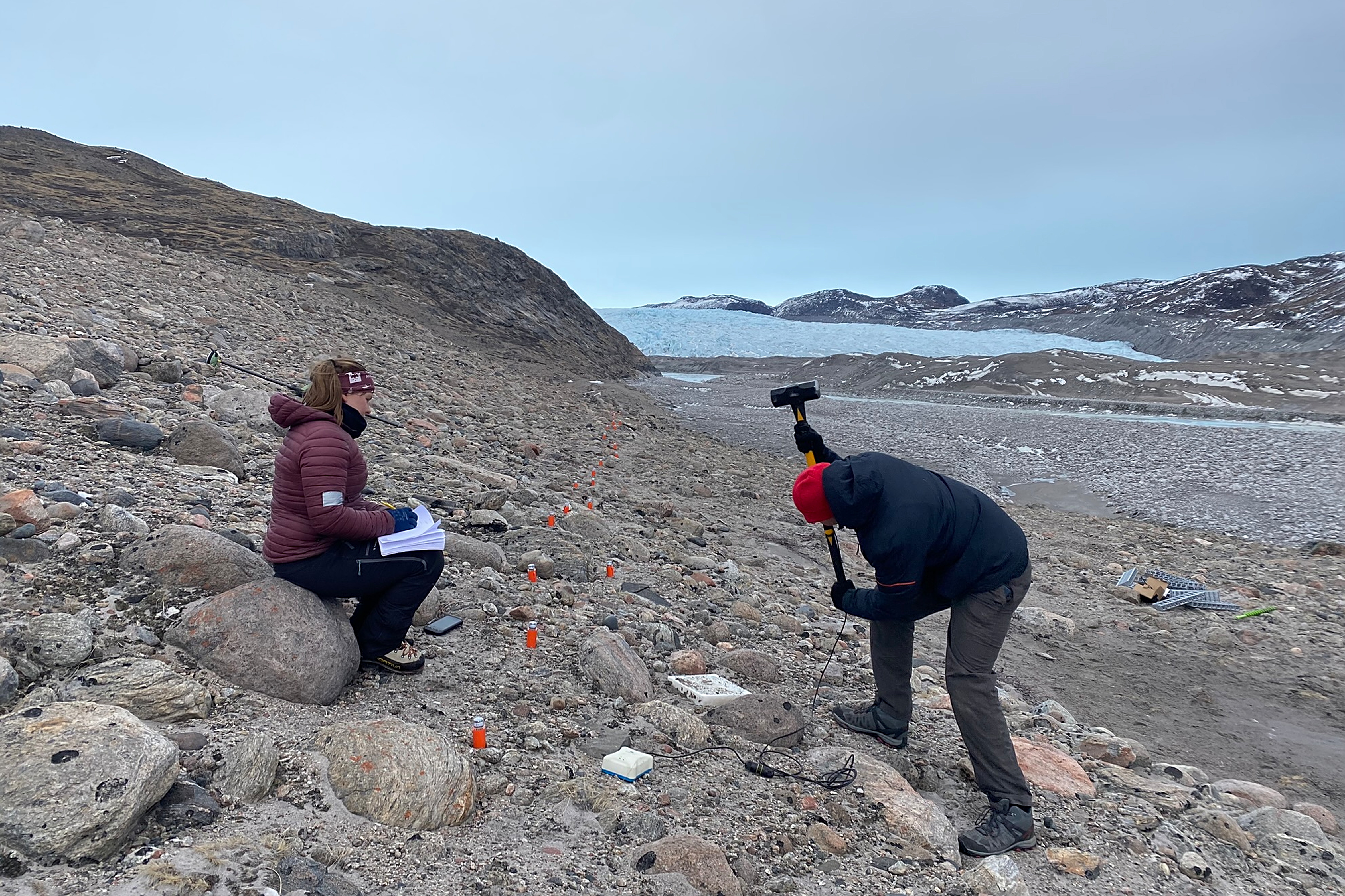
In April 2026, James Hammond from Birkbeck, University of London joined the GRuMPS field team to undertake seismic experiments using Stryde nodes at Leverett Glacier. While traditional seismometers weigh tens of kilograms each and are therefore difficult to transport, each Stryde node weighs just 150 g allowing a hundred to be carried by a single person. Several transects of Stryde nodes were deployed along the Leverett river and in addition to 2-month-long passive monitoring, hammer and plate active seismic surveys were undertaken. These data will allow us to determine the optimal distance for long-term passive seismic stations as well as the acoustic properties of the substrate. The nodes were recovered in July 2026 and the data will be analyed once the nodes arrive back in the UK. The Stryde nodes are part of the Large N Seismology for the UK science community (LeNS UK) project, and you can read more on the Stryde website.