Nuuk Fieldwork update, July 2026
A gap in the clouds allows four new stations to be installed
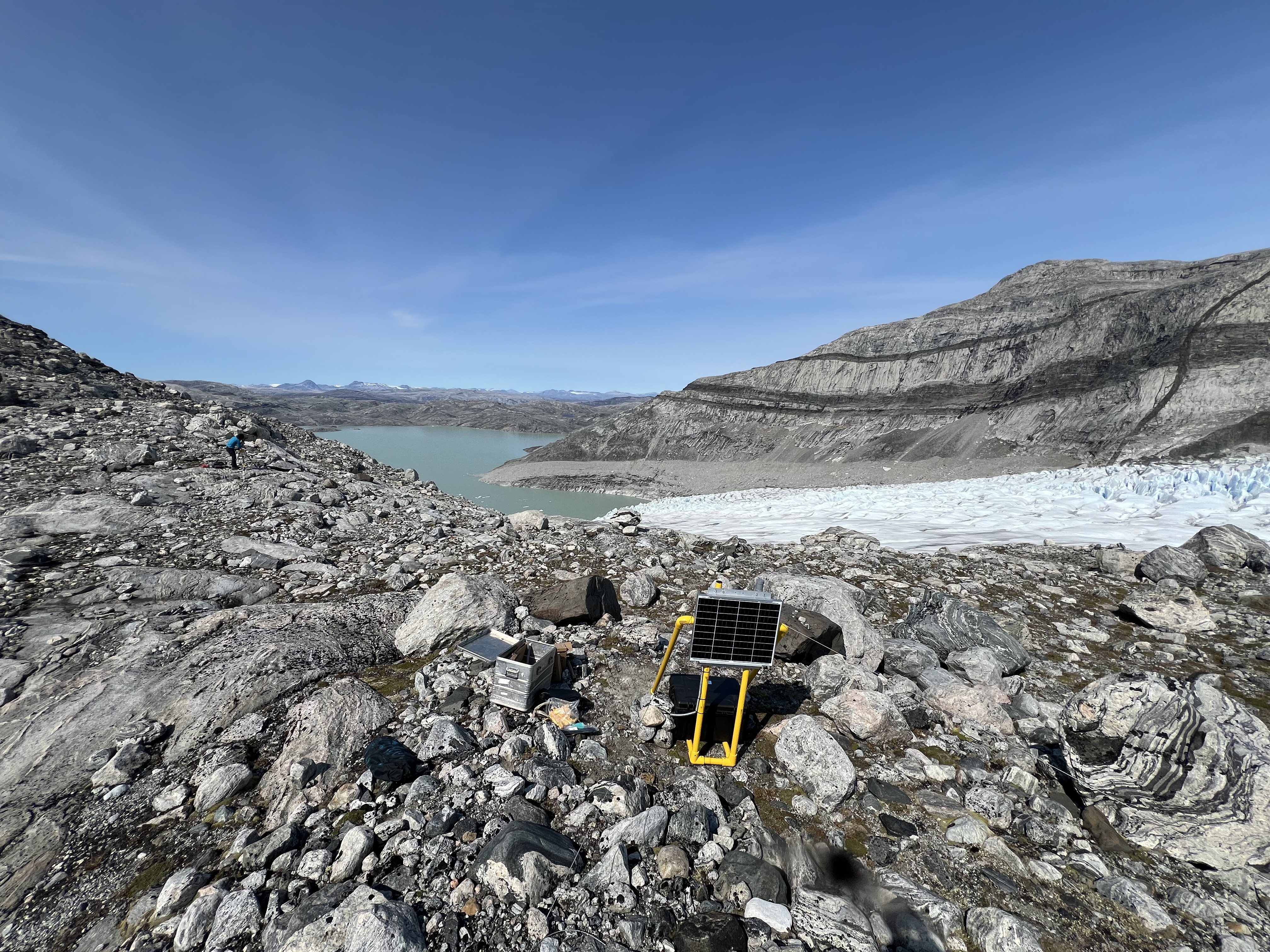
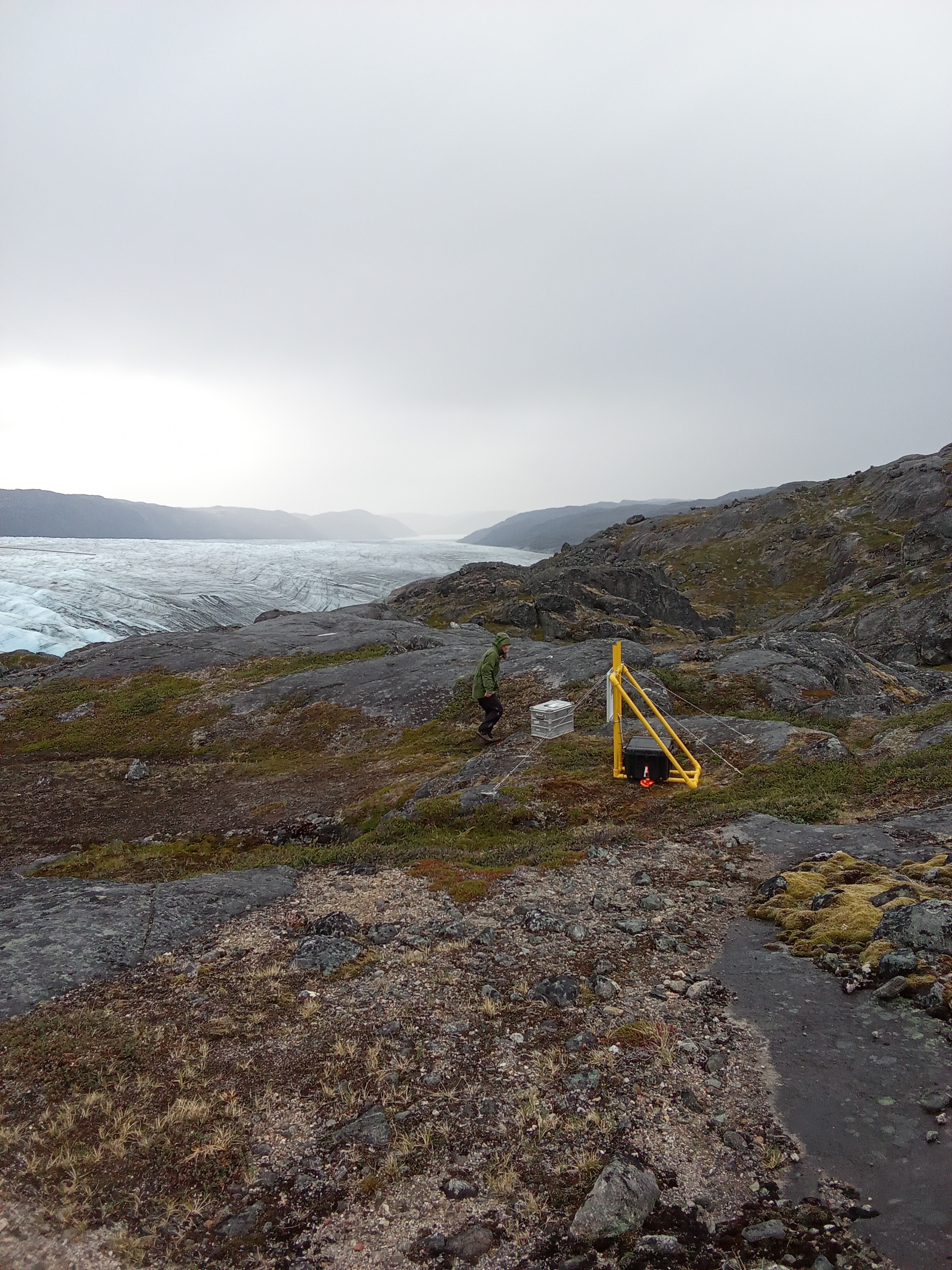
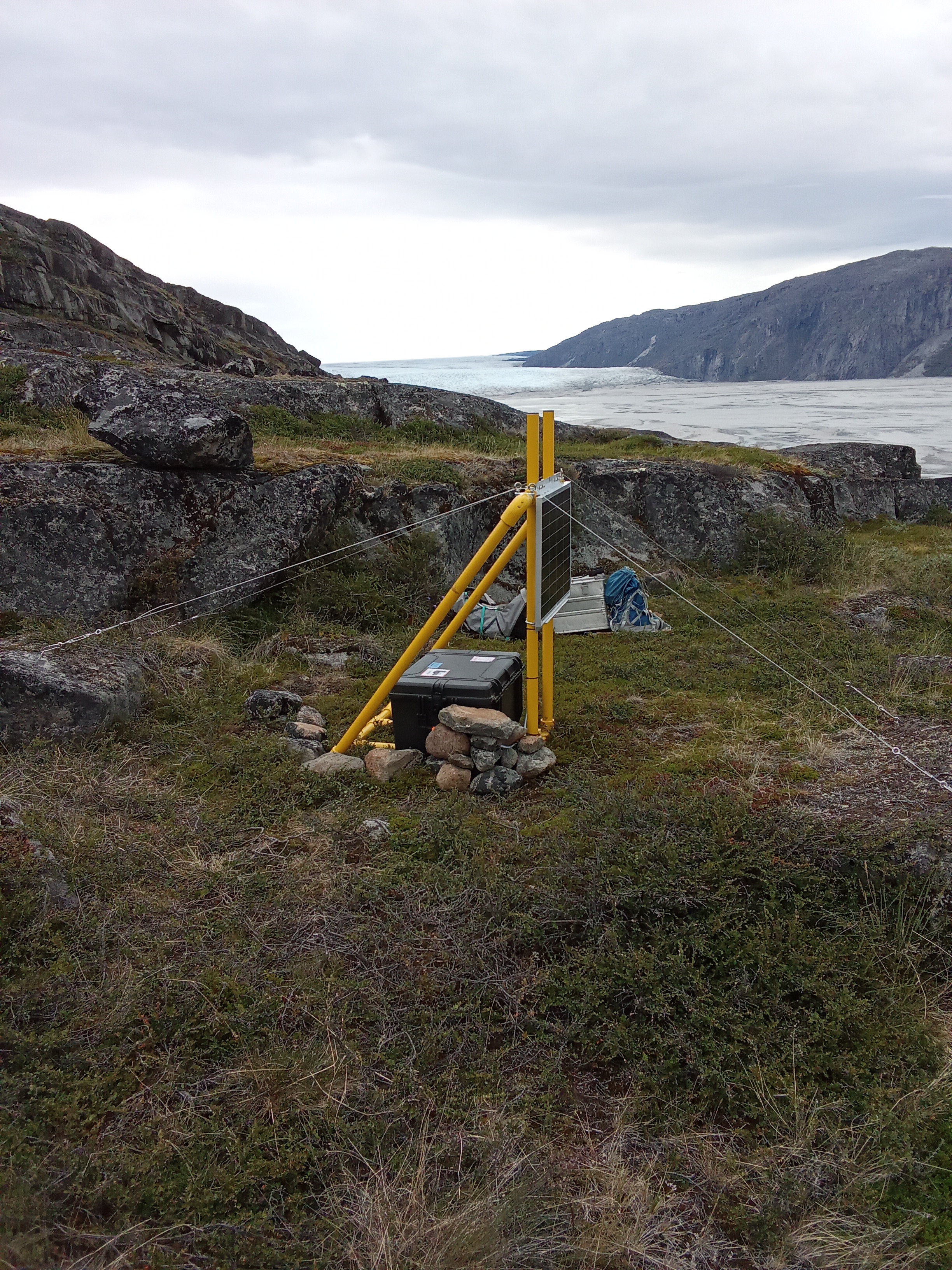
In July 2026 the GRuMPS project’s monitoring network was expanded with four new passive seismic stations deployed in south-west Greenland by Dorthe Petersen and colleagues from Asiaq Greenland Survey. Due to the remoteness of the locations the field team and equipment were transported by helicopter from Nuuk to the field sites. The operation was challenged by unstable weather conditions with fog and low clouds; not favourable for helicopter operations in mountainous terrain that requires good visibility. We managed to get the work done during a gap in the clouds, and with thanks to the help and flexibility of the Air Greenland pilot and charter department.
At two of the new sites, we have set up passive seismic stations next to glaciers terminating in lakes. The water level and discharge out of the lake is monitored by a traditional hydrological station. Utilising the water balance for the lake, we have a validation dataset for the passive seismic stations’ measurement of the water flowing under the glacier. With this setup we can evaluate how suitability of the passive seismic method to monitoring water flow beneath marine-terminating glaciers.
At another new site one passive seismic station was set up next to a glacier, and another passive seismic station was set up next to the proglacial river, photos below.