Greenland Runoff Monitoring using Passive Seismics
An update from the field, 19 May 2026
Siân Thorpe reflects on fieldwork at Leverett Glacier
In April 2026, members of the GRuMPS team along with a several collaborators headed out to our Leverett Glacier and Isunnguata Sermia sites in southwest Greenland. Our aim was to install new stations and service existing ones. April brought with it a mix of weather conditions, including snow, heavy winds and temperatures ranging from -17 to +7°C. An unexpected warm spell midway through meant we were incredibly lucky to catch the first melt of the year.
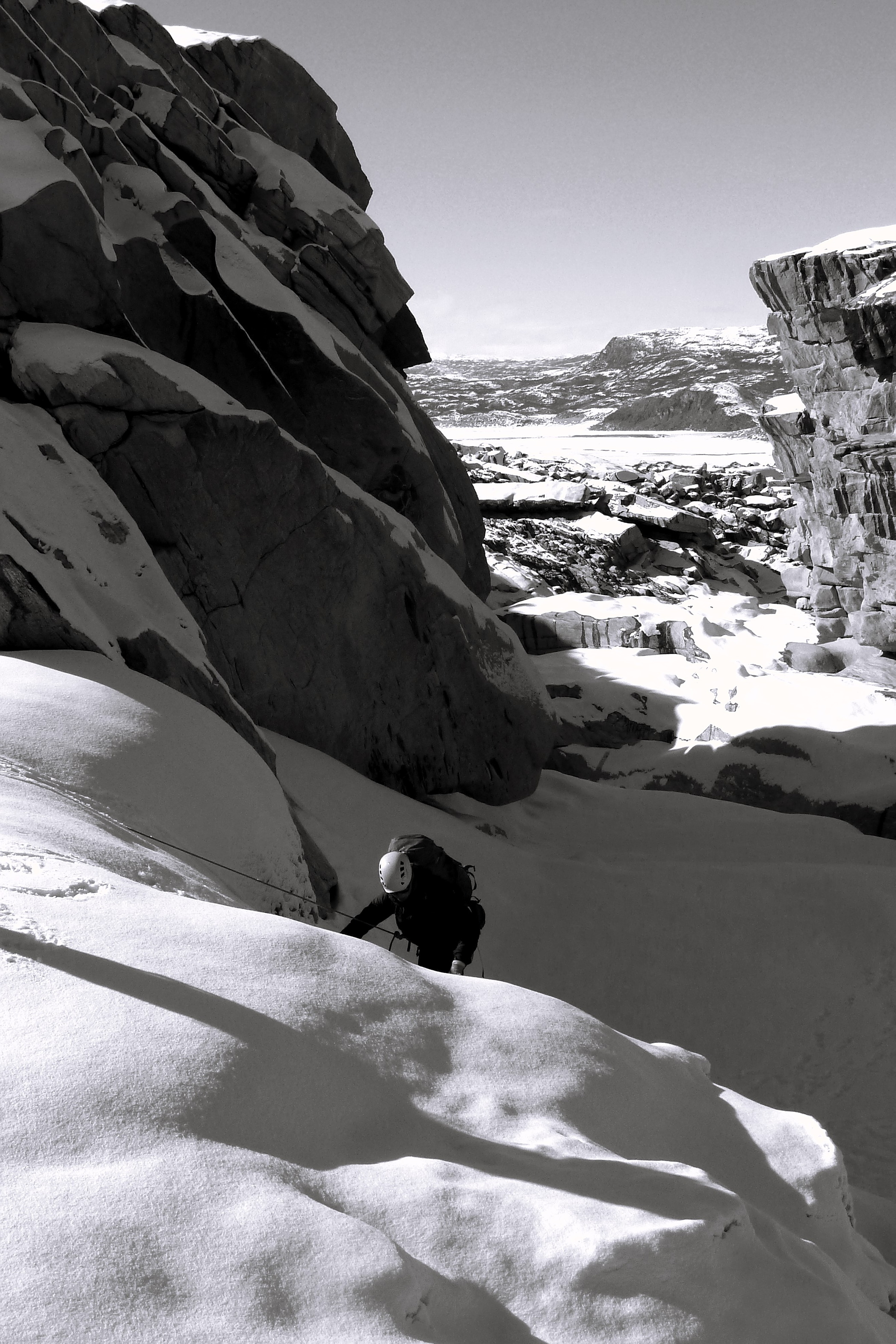
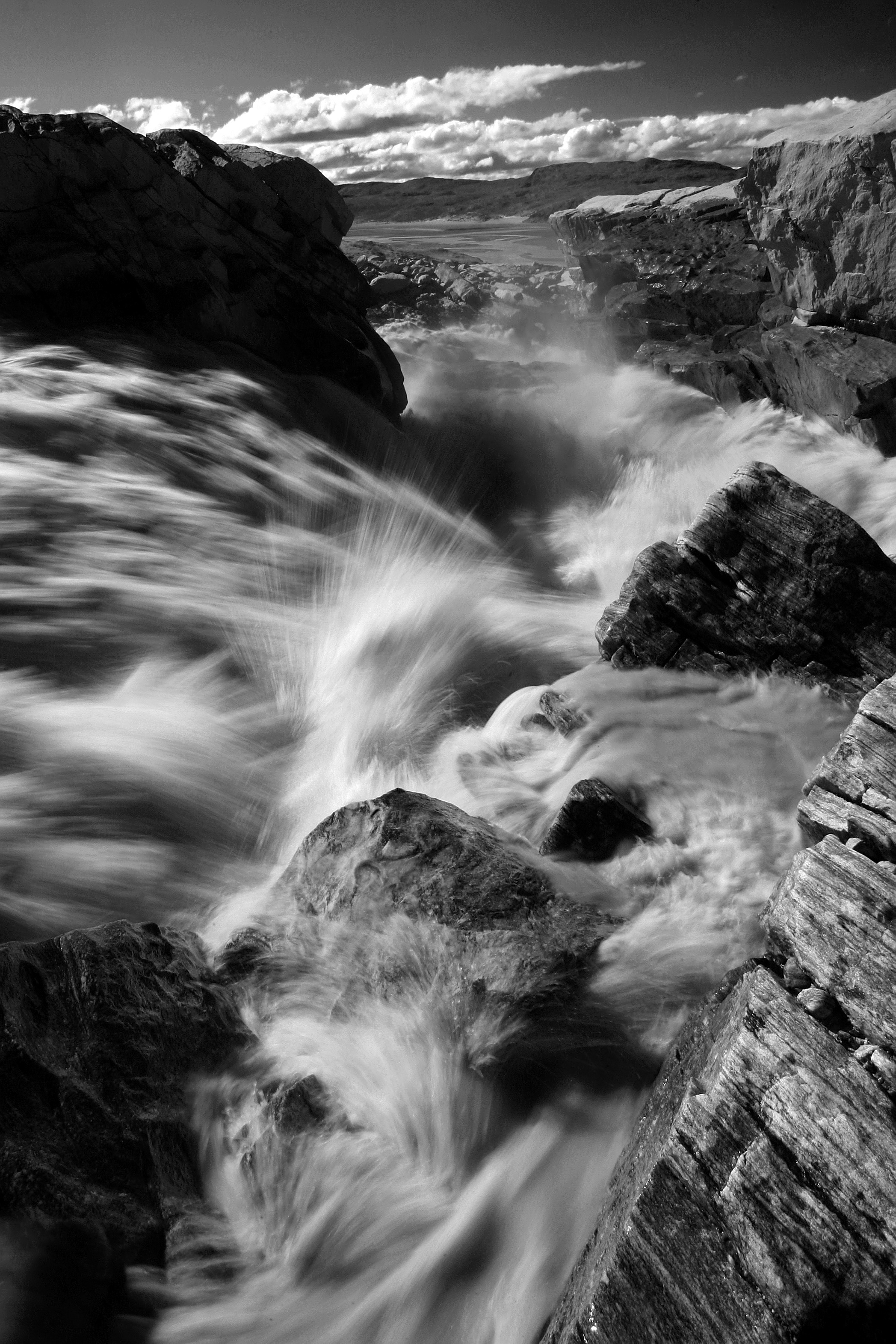
Leverett waterfall in April 2026 (right) and in full flow in summer 2010. (Photo: Andrew Sole)A ghost river: in the first few days the Leverett river was frozen solid. This helped with crossing the river into camp and made installing the gauging station much easier. The frozen riverbed also highlighted one of the reasons seismometers can be more useful than traditional gauging stations: a range finder, which measures the distance to the river surface, would mistake the ice for running water, whereas our seismometers would not. The photo above and on the right shows the river in full force in Summer 2010.
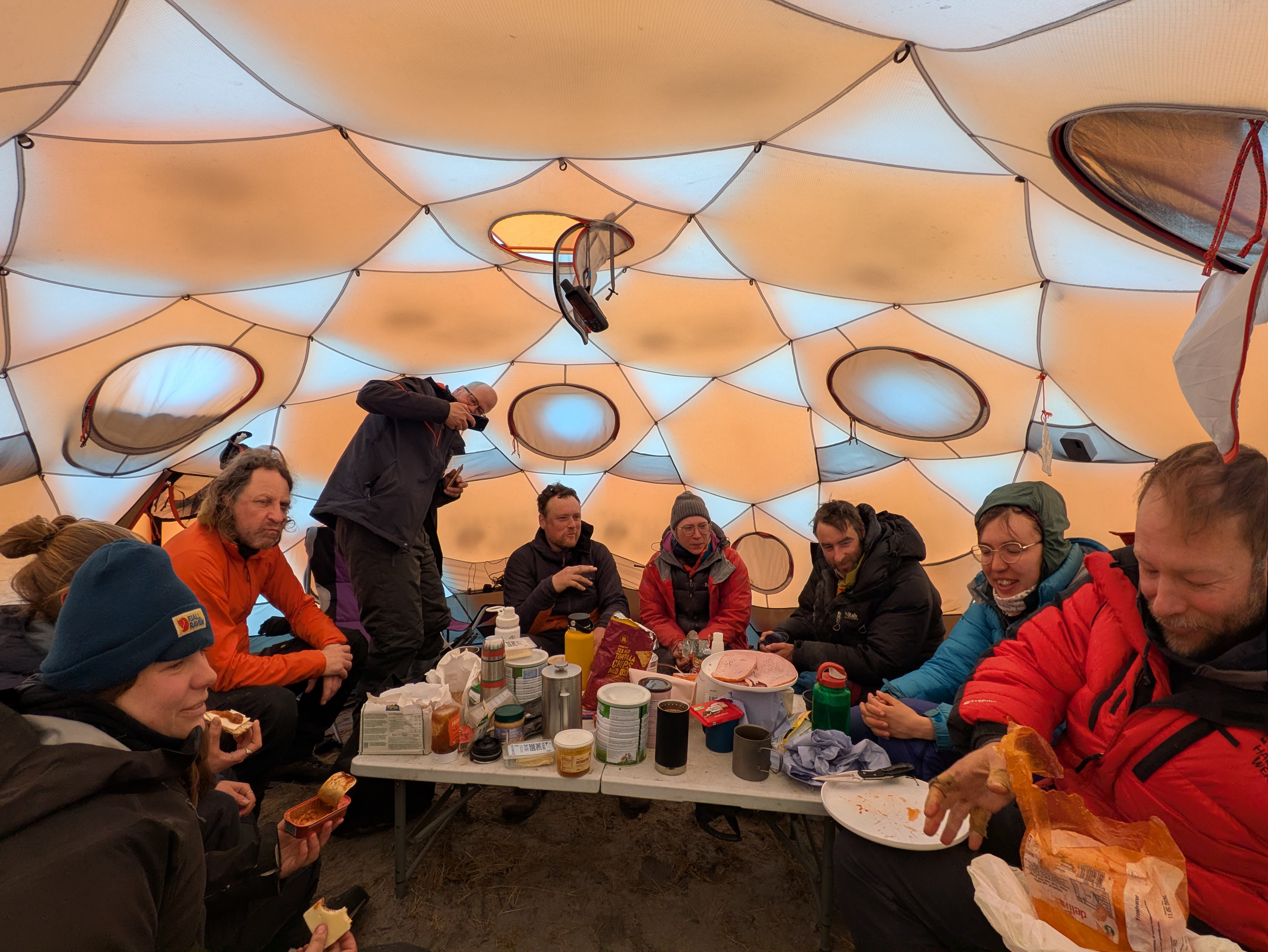
Camp life at these temperatures can be hard - but we were well fuelled - especially with chocolate! - and we enjoyed the evening together in the mess-tent using hydrating expedition meals as hot water bottles.
Sharing food and stories in the mess tent. (Photo: Liz Bagshaw)
At this stage in the GRuMPS project we are testing whether our method works, therefore, in addition to installing seismometers we installed a traditional gauging station at Leverett. We also were lucky to collaborate with LENS UK to install over 100 small seismic nodes at varying distances from the river. These will help us determine the best locations for future stations.
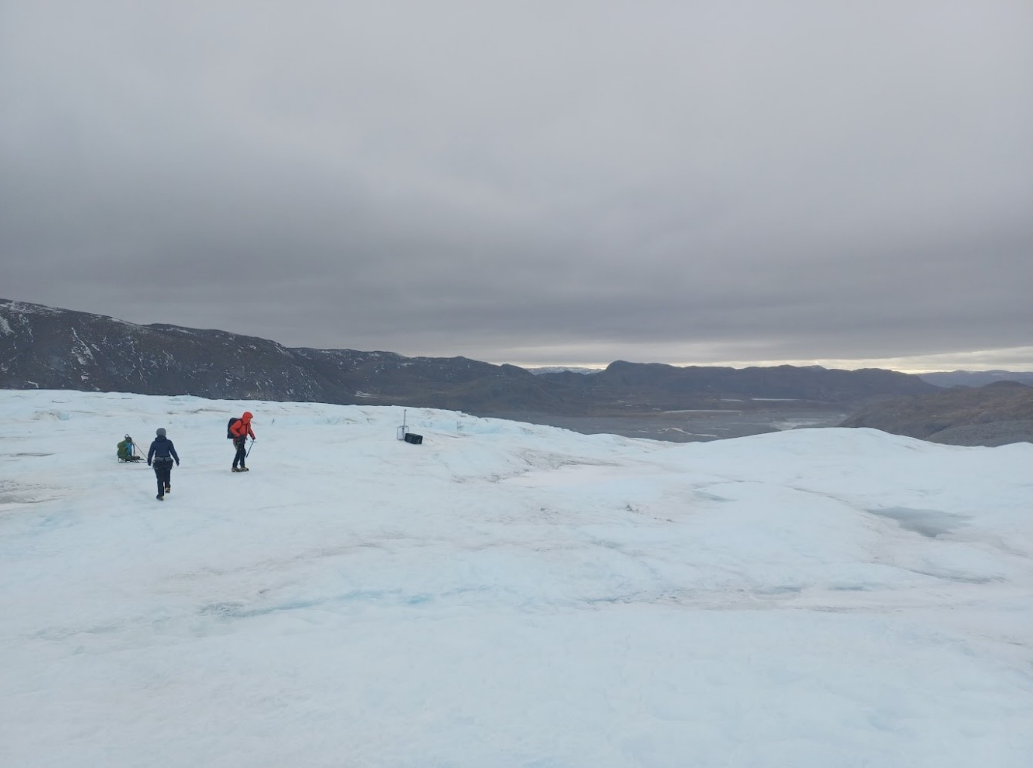
On Leverett Glacier we installed a seismometer on the ice to ‘listen’ for the water flow under the ice.
At Leverett we installed a seismometer both on, and adjacent to the ice, to test if both can detect seismic signals from water flow under the ice – which is otherwise very difficult to measure.
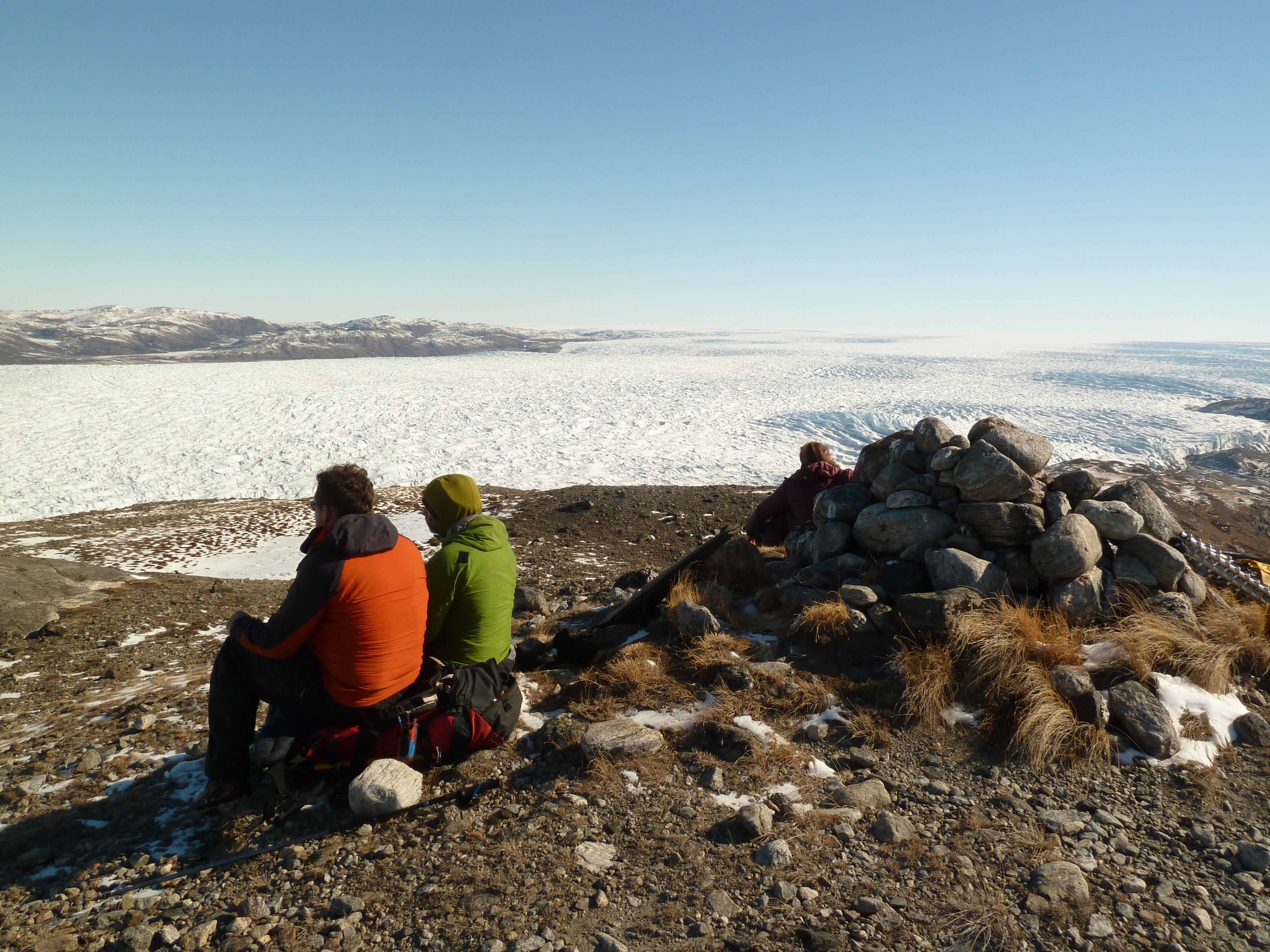
During the final leg of the field season, four of us stayed behind to service existing GRuMPS stations on Isunnguata Sermia. We had a basic camp setup with no mess tent, but we were thoroughly rewarded with beautiful views and plenty of wildlife sightings.
Sam, Tom and Tifenn enjoying a well earned rest whilst taking in what I believe is the best view in the world!